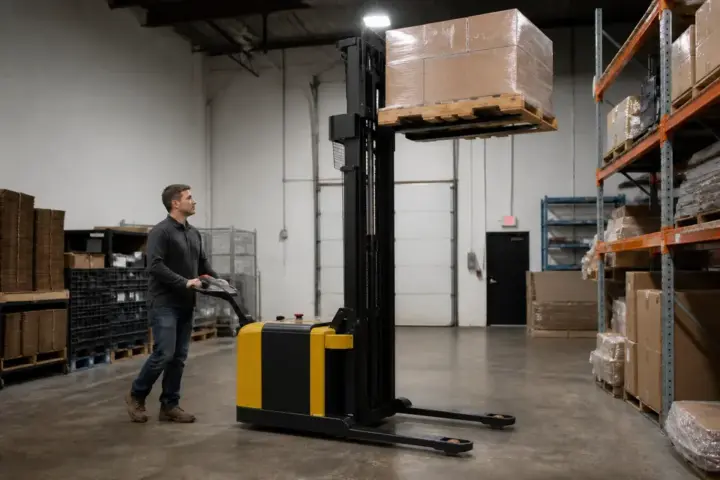
Forklift charger requirements should be confirmed before an electric truck is ordered. The right truck price includes a workable energy plan, so connect electric forklift prices with the battery voltage, chemistry, capacity, connector, facility power and available charging time. See current forklift battery prices.
A charger that physically plugs in is not automatically correct. The battery and charger must be compatible, and the electrical installation must support the equipment safely under the intended duty cycle. See current forklift battery prices.
Start with the battery nameplate and manufacturer information
Record battery voltage, rated capacity, chemistry and approved charging method. Identify the charger output, connector and communication requirements. For integrated lithium-ion systems, the truck, battery management system and charger may need a specific matched configuration. For lead-acid batteries, charging rate, watering, equalization and cooling time may influence shift planning.
The electric forklift overview and battery cost comparison explain why the energy package belongs in the equipment decision.
Verify facility voltage, phase and circuit capacity
Give a qualified electrical professional the charger’s actual input requirements. Facility voltage and phase must match, and available circuit capacity must account for simultaneous charging. Do not select equipment from a generic plug description or assume an adapter solves an electrical mismatch.
Ask who supplies disconnects, protection, wiring, receptacles and commissioning. Keep utility and installation work separate in the price comparison so an apparently lower charger proposal does not omit the facility connection.
Plan the charge around the working shift
Document truck hours, breaks, shift changes and battery state at the end of work. A single-shift operation with overnight charging has different requirements from a multi-shift facility using opportunity charging or battery changes. Build the charger count around peak simultaneous demand, not the fleet total alone.
- Battery voltage, chemistry and capacity
- Approved charging profile and maximum rate
- Input voltage, phase and current
- Connector type and cable reach
- Charge time, cooling time and shift window
- Simultaneous chargers and electrical load
- Future fleet growth and spare capacity
Design a practical charging area
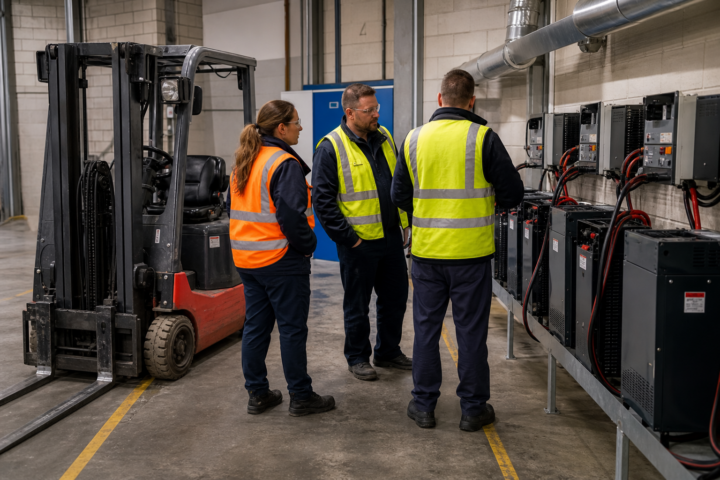
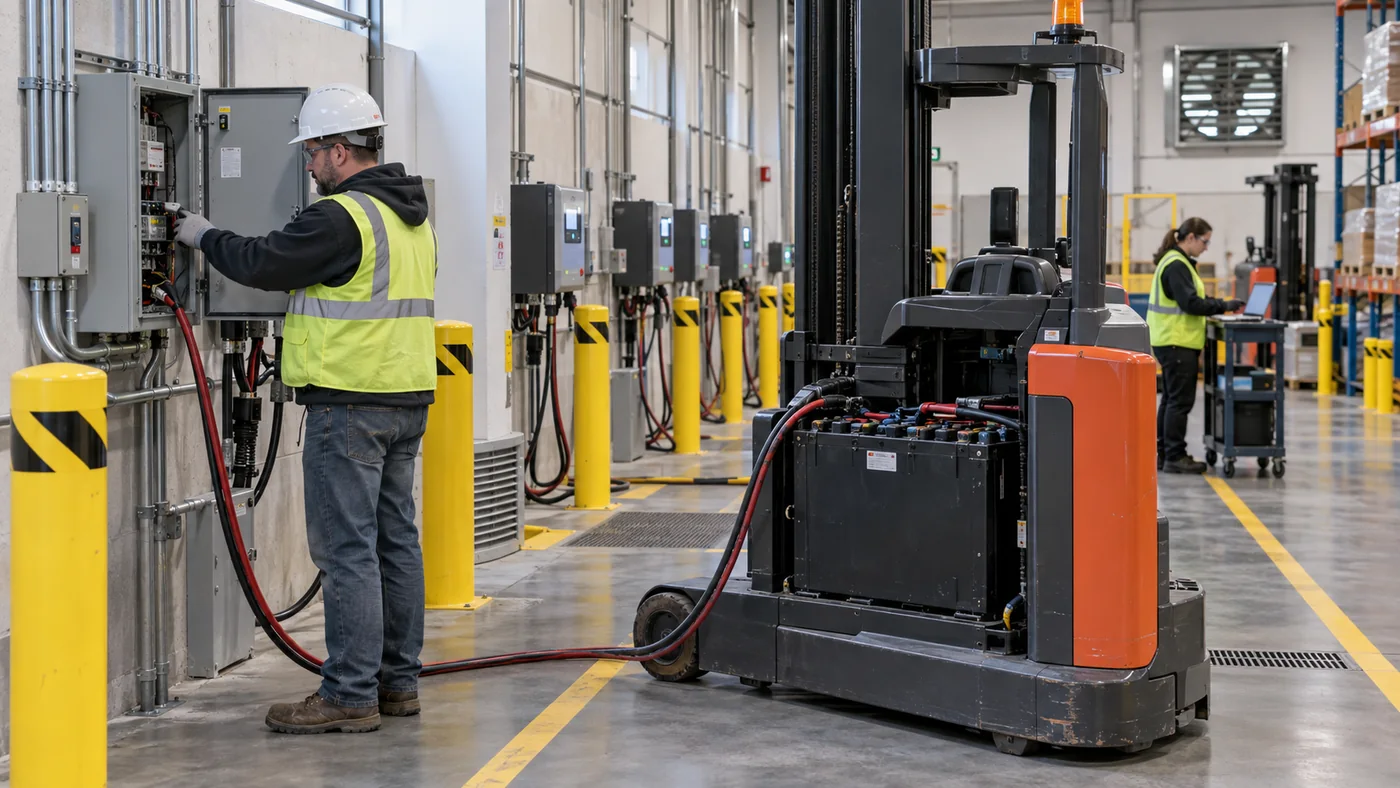
Locate chargers where trucks can enter and exit without blocking travel lanes. Protect equipment from impacts, manage cables off the floor and preserve required working clearances. Battery handling, ventilation, eye wash, spill control and fire protection depend on the battery type, equipment and applicable requirements; involve qualified safety, electrical and facility professionals.
Use the charging-room cost checklist to identify facility work before the forklift arrives.
Check the connector and communication path
Connector shape, polarity, cable gauge and truck interface need verification. Smart chargers may exchange information with a battery management system, and a mismatched unit may charge poorly or refuse to charge. Label assets and keep approved pairings in maintenance records so a temporary swap does not create a hidden problem.
Include charger support in the ownership plan
Ask about warranty, fault diagnostics, parts, software access where relevant and who can service the unit. A charger failure can sideline an otherwise healthy forklift. Compare expected uptime and support with the warehouse forklift total-cost guide.
Can one charger serve several forklifts?
Possibly, when battery specifications, connectors, charge windows and duty cycles allow it. Confirm the pairing rather than assuming. One shared charger can also become a bottleneck or single point of failure.
Should a buyer order the charger from the forklift supplier?
A matched package can simplify accountability, but the supplier still needs verified facility information. Whether components come from one source or several, assign responsibility for compatibility and commissioning. Use the forklift buyer’s guide and equipment resources to prepare questions. The best charger is the one matched to the battery, building and real shift—not merely the lowest accessory price.