
How do you match a rough-terrain forklift to the site?
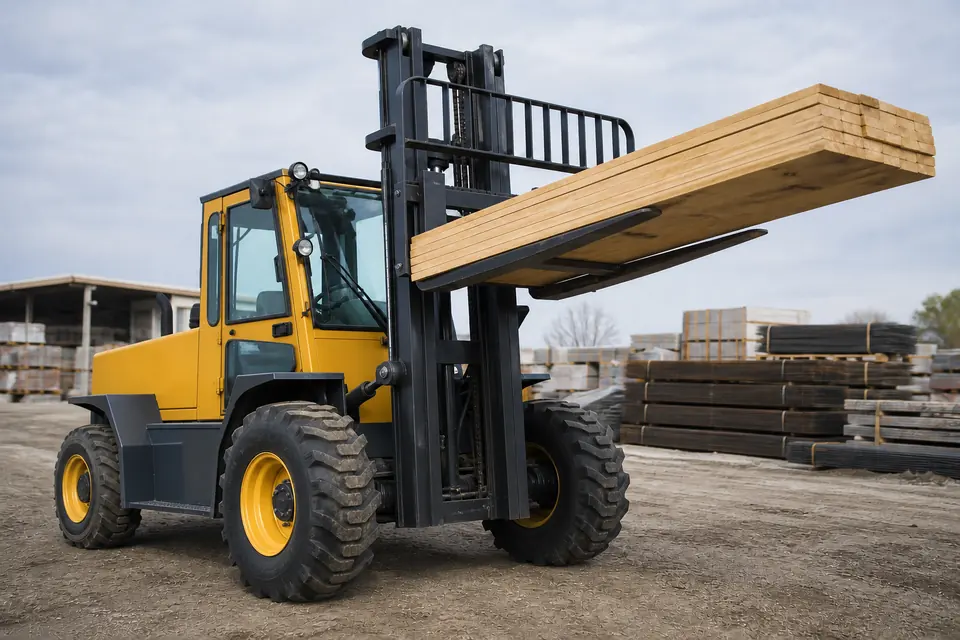
Compare new and used rough-terrain forklifts for sale or rent rough-terrain forklifts for temporary capacity. Ground conditions, grades, load center, tire type, clearance and transport requirements all affect the right rough-terrain configuration.
Construction sites, lumber yards and outdoor storage areas can require increased clearance, aggressive pneumatic tires and drive configurations suited to loose or uneven surfaces. Review travel routes, grades, load placement, attachment needs and equipment transport before comparing machines. When comparing rough-terrain forklift prices, request the same capacity, configuration and delivery terms from each supplier. That makes used rough-terrain forklifts for sale easier to compare with new equipment and rough-terrain forklift rentals.
Use our forklift equipment guide to compare related machines, review current inventory, explore forklift rental options and consider equipment financing for the application.
- Two-wheel and four-wheel drive options
- Pneumatic tires and higher ground clearance
- Construction, lumber and yard applications
- Purchase, rental and financing paths
How to Choose Rough-Terrain Forklifts for Sale or Rental
Rated capacity alone does not define equipment fit. The usable capacity at the required lift height, load dimensions, attachment weight, operating surface and access limits can change the practical choice. Businesses should also consider operator visibility, tire configuration, energy or fuel access, maintenance planning and how many hours the truck is expected to work.
Buy, Rent or Lease Rough-Terrain Forklifts
New rough-terrain forklifts for sale can support specific configurations and longer ownership plans. Compare used rough-terrain forklifts for sale when hours, condition and specifications fit the application. Rough-Terrain Forklift rentals can cover seasonal demand, temporary replacement and project work. Compare rough-terrain forklift financing and lease options against the purchase price and expected length of use.
Compare Rough-Terrain Forklift Prices and Quotes
Share the maximum load weight and dimensions, target fork height, indoor or outdoor environment, floor or ground conditions, aisle and doorway limits, ZIP code and required date. Those details help identify suitable rough-terrain forklifts for sale and rental availability. Request rough-terrain forklift price quotes with delivery, rental length and any attachments included.