What information helps find the right forklift?
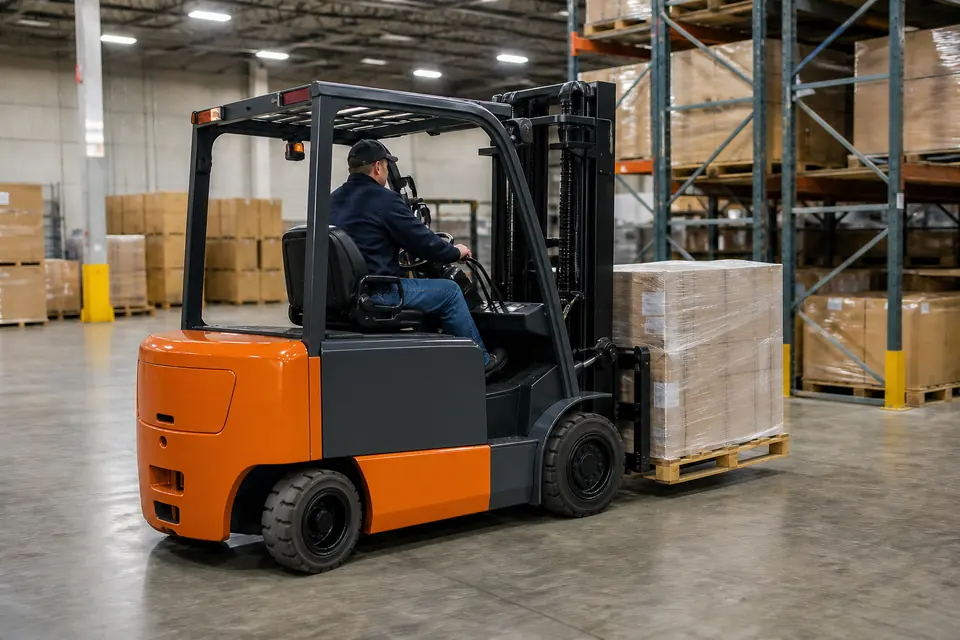
A productive forklift search begins with the work rather than a brand name or advertised capacity. Record the maximum load weight, load dimensions, load center, required fork height, clear aisle width, doorway height, overhead restrictions and operating surface. Our forklift equipment guide explains how common forklift types address different warehouse, yard and jobsite requirements.
Daily operating hours, shifts, charging or fuel access, grades, ramps, travel distance and attachment needs can change the practical choice. Include the delivery ZIP code and required date so equipment availability and transportation can be evaluated with the specifications.
How much forklift capacity do you need?
Headline capacity is only a starting point. Capacity is tied to a stated load center and can change when the load is longer, the mast is raised or an attachment moves the load forward. Provide the heaviest real load and its dimensions. A supplier should evaluate usable capacity at the required height and configuration.
Buying too little capacity creates an obvious safety and productivity problem. Buying far more than necessary can add cost, size and energy use while reducing maneuverability. The goal is appropriate capacity with a sensible operating margin.
Which forklift power source fits the operation?
Electric forklifts are widely used for indoor warehouses, manufacturing and applications that value lower point-of-use emissions and quieter operation. Battery chemistry, charger capacity, opportunity charging and shift pattern should be considered together.
Propane and diesel forklifts can support docks, yards, lumber operations and demanding duty cycles. Fuel availability, emissions policies, ventilation and maintenance capabilities belong in the decision.
Which forklift tires match the working surface?
Cushion tires provide a compact footprint for smooth indoor floors and paved applications. Pneumatic and pneumatic-style tires add clearance and traction for docks, yards and variable surfaces. Rough-terrain machines use larger aggressive tires and higher-clearance chassis for unprepared ground.
How do mast height and aisle width affect selection?
Measure the highest placement point, pallet height and required clearance. Document lowered mast height for doors, trailers and overhead restrictions. Counterbalance trucks need room to turn the load into position. Reach trucks serve higher-density rack and narrow aisles, while articulated equipment can support tighter storage plans.
Which forklift attachments are required?
Side shifters, fork positioners, clamps, rotators, push-pull attachments and specialty forks can improve handling for the right load. Attachments add weight and may change effective load center, so include them when capacity is evaluated.
Should you buy a new or used forklift?
New forklifts can provide current technology, warranty coverage, predictable configuration and a longer planned service life. Used forklifts may reduce acquisition cost and lead time when condition, hours, mast, tires, battery or fuel system and attachments fit the job. Review service history, leaks, mast channels, chains, forks, brakes, steering, safety equipment and data plate information. Use the new and used forklifts for sale to organize a current-equipment request.
When should a business rent a forklift?
Forklift rental options can support seasonal peaks, projects, temporary replacement and uncertain long-term demand. Compare the rental period, included hours, delivery and pickup, fuel or charging responsibility, maintenance, damage policies and extension cost.
How does forklift financing affect the purchase?
Equipment financing can preserve working capital and align payments with the useful life of a forklift. Compare term, rate, fees, down payment, ownership structure and early-payoff provisions with qualified financial and tax advisors.
What determines total forklift ownership cost?
Total cost includes purchase price, fuel or electricity, batteries and chargers, maintenance, tires, repairs, downtime, training, attachments, insurance, facility changes and expected resale. Utilization matters: a lower-priced truck that creates recurring downtime can cost more than a better-supported alternative.
What belongs in a complete forklift price request?
- Maximum load weight, dimensions and load center
- Required fork height and lowered mast clearance
- Clear aisle, doorway and overhead measurements
- Indoor, outdoor or mixed operating surface
- Power preference, daily hours and shifts
- Required attachments and fork dimensions
- New, used, rental or open-to-options preference
- Delivery ZIP code and required date