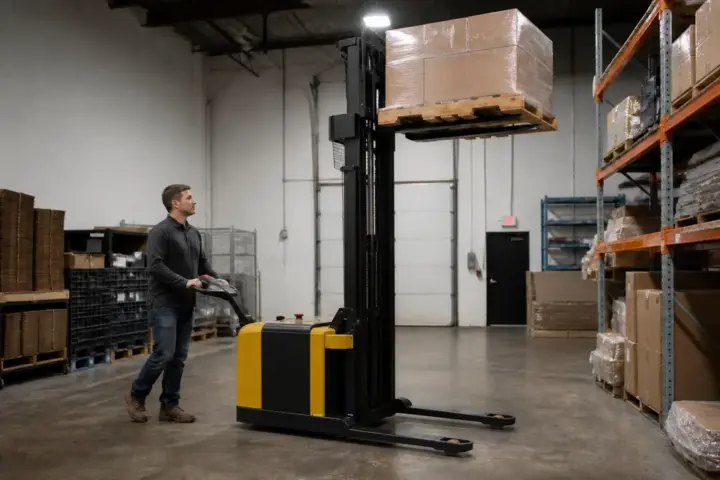
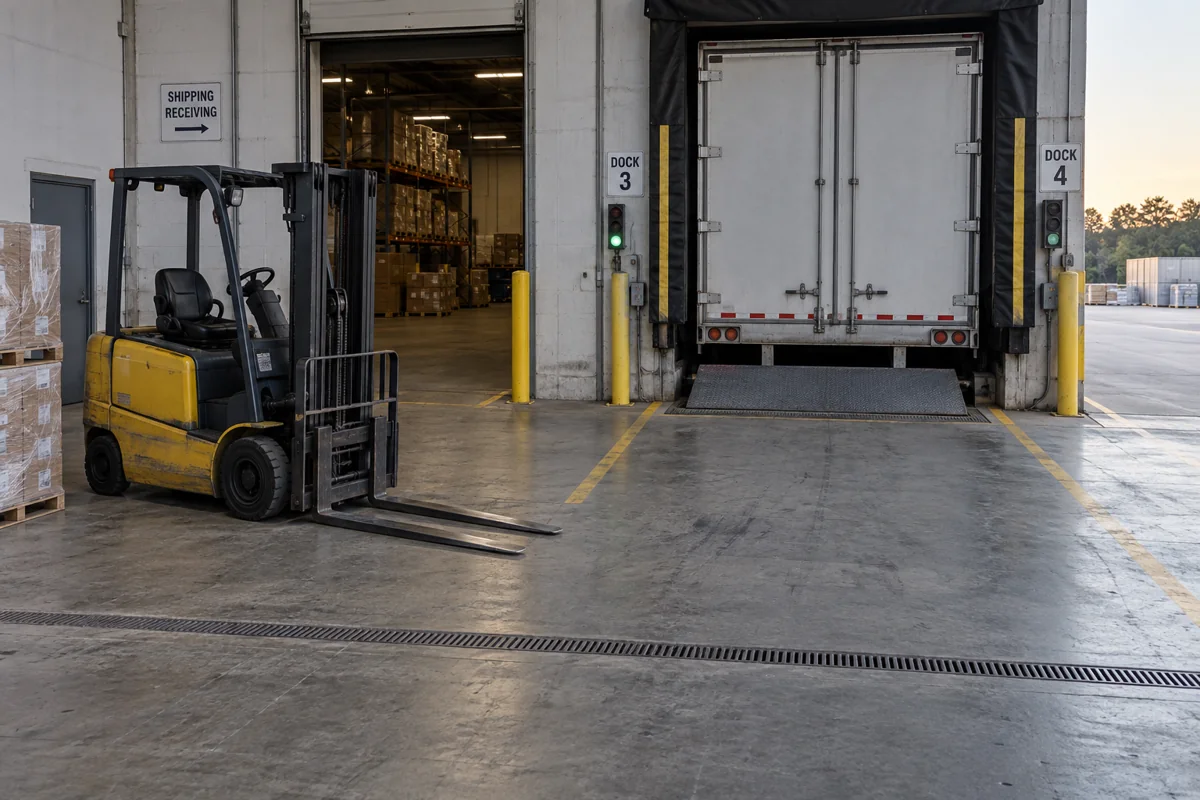
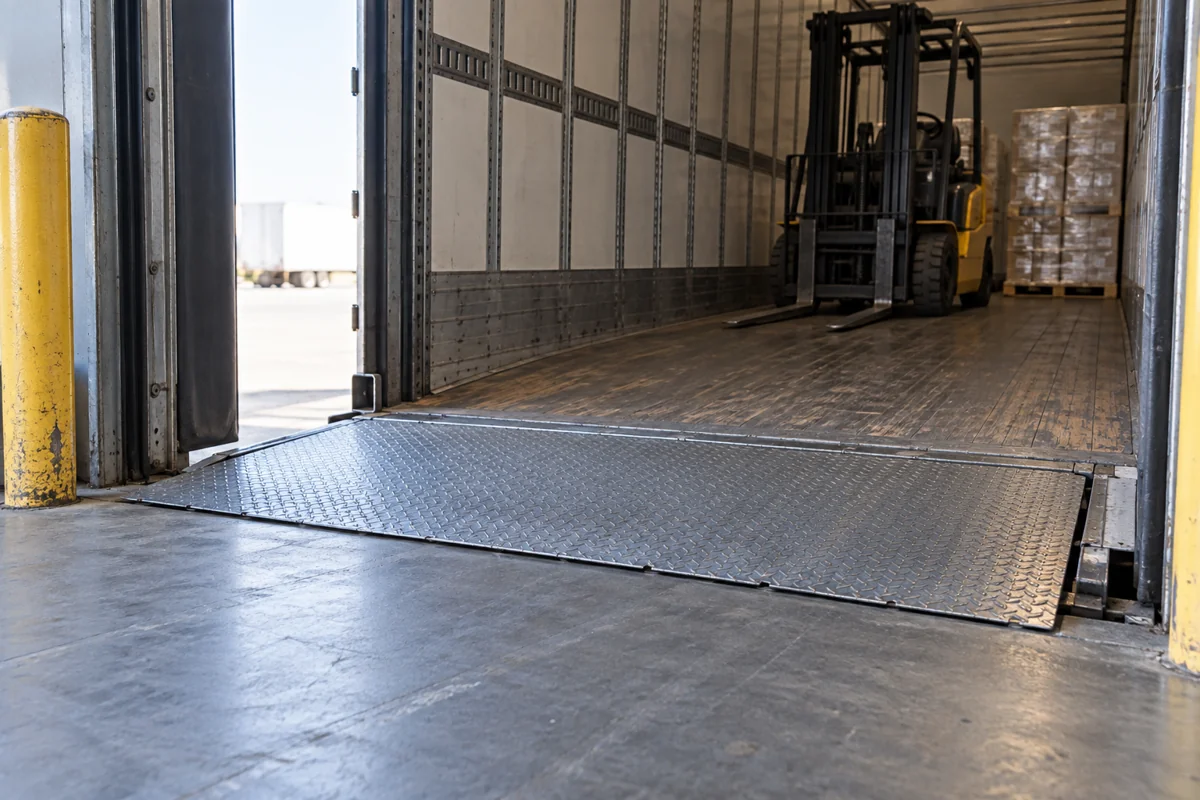
Buying a dock forklift starts with a route: warehouse floor, dock transition, trailer entrance and the space inside the trailer. Each part can limit the truck. A machine that works comfortably beside the dock may be poorly suited to driving into the trailer itself.
Find the best forklift for loading docks by testing the route
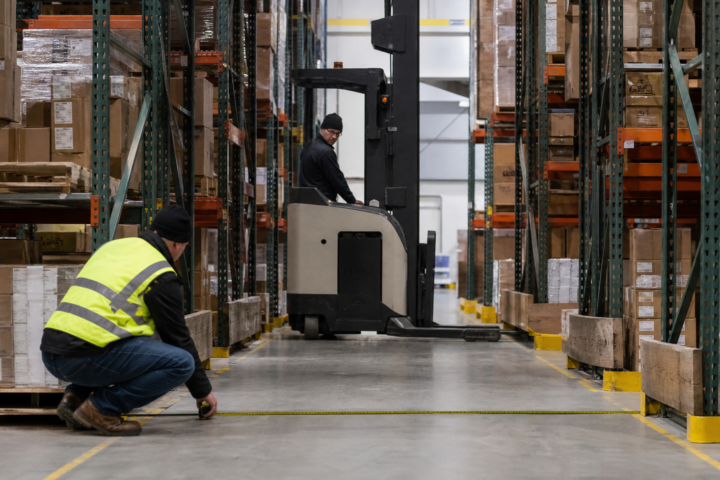
There’s no universal best forklift for loading docks. Measure the door and trailer clearances, turning space and any height restrictions with the mast in its travel position. Note the dock equipment, floor transitions and load dimensions. Have a qualified supplier assess the complete intended operation.
Your forklift buying checklist should include the heaviest load and its actual load center. Also verify that the trailer floor and dock equipment are suitable for the loaded truck’s total weight and wheel loads. A cargo weight figure alone doesn’t establish that suitability.
Ask the supplier to explain these three choices
Truck type. A counterbalance forklift may suit pallet movement and loading, while other equipment may fit a narrower task. Make the supplier explain the recommendation using your route and handling requirements.
Tires and ground conditions. Smooth indoor floors, outside approaches and uneven transitions need different consideration. Don’t select tires solely because the truck spends most of its day indoors.
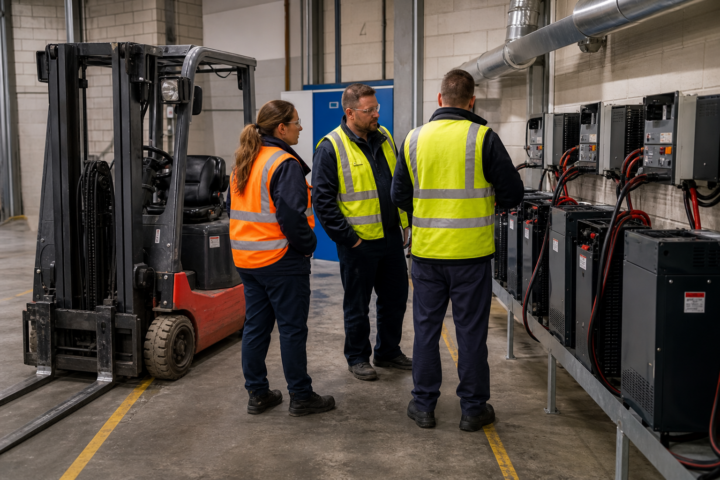
Power and shift coverage. For electric forklift options, discuss the battery, charger and available charging periods. Specify whether the truck must cover consecutive shifts or predictable loading peaks.
Can a forklift drive into every delivery trailer?
No. Clearance, floor suitability, dock setup and the particular truck-and-load combination must be checked. Your operating procedures must also address trailer restraint, pedestrian control and other required precautions. A supplier equipment recommendation isn’t a substitute for a site-specific loading safety assessment.
Used equipment still has to pass the route check
A used truck may fit the job, but inspect its condition and confirm the required configuration. Review used forklift inventory against the same capacity, clearance and duty requirements as a new truck. Maintenance history and support availability belong in that comparison.
Where a controlled trial is appropriate, ask about forklift rental options matching the proposed configuration. Use representative loads and authorized operators, with the site’s precautions in place.
Before requesting dock forklift prices, put the trailer types, load weights, measurements and shift pattern on one page. Ask each supplier to identify any condition that would prevent its proposed truck from carrying out the intended loading job.