The best forklift for a small warehouse is the least complicated truck that safely handles the real load, height, aisle and duty cycle. Price matters, but buying too much truck wastes space and capital while buying too little creates delays and safety problems.
Walkie stacker
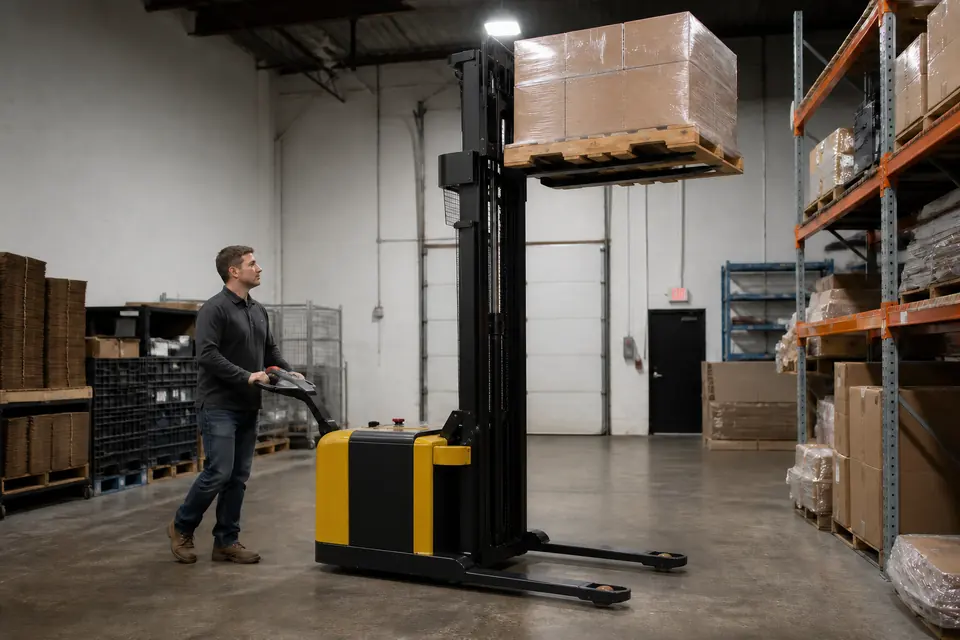
A walkie stacker can suit light, intermittent pallet movement and modest lift heights. It usually costs less than a rider forklift but is not a substitute for higher throughput or long travel.
Three-wheel electric forklift
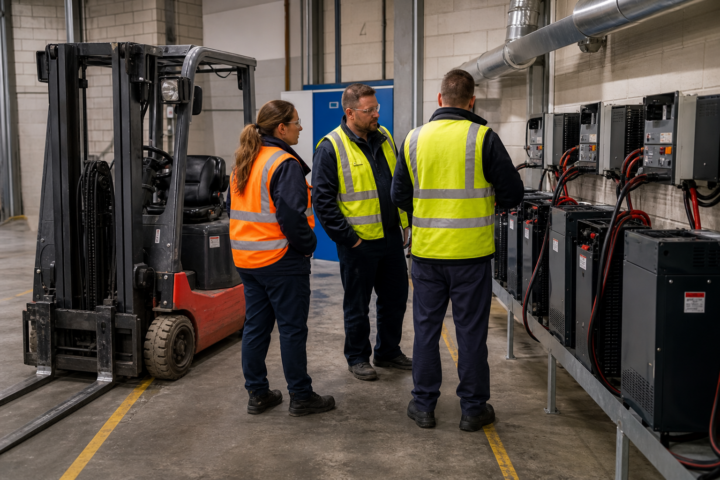
A three-wheel electric counterbalance truck offers tight turning and general-purpose flexibility. Compare battery, charger and facility requirements using our electric forklift price checklist.
Reach truck
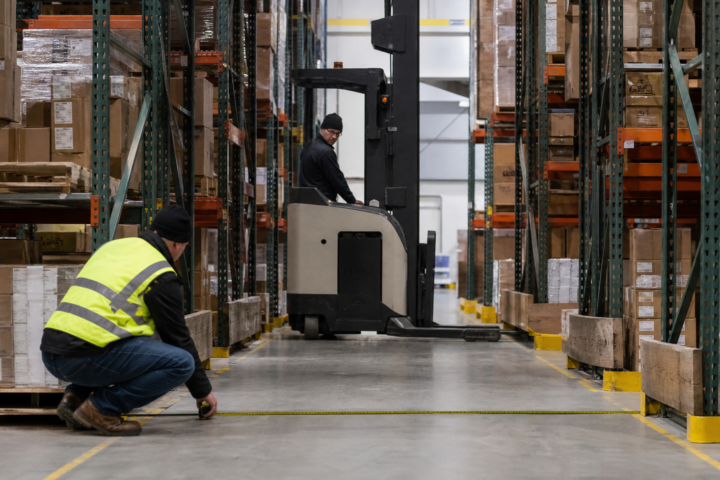
A reach truck is built for warehouse racking and narrower aisles. It can recover storage density, but floors, rack clearances and operator needs must fit the application.
Four-wheel counterbalance forklift
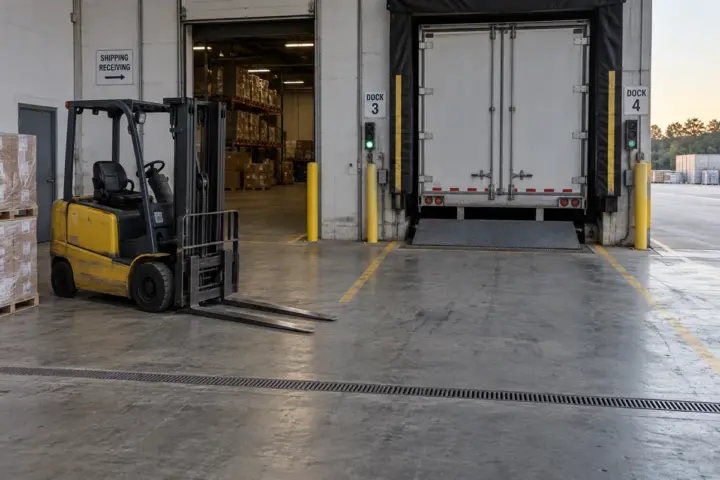
A four-wheel counterbalance truck may be preferable for heavier loads, docks or indoor-outdoor travel. Check turning space with the aisle-width guide.
Compare ownership and rental
For occasional demand, a rental may be more practical than ownership. Compare usage and flexibility with buying, renting and leasing.
Frequently asked questions
What is the smallest practical warehouse forklift?
That depends on load and height; powered pallet trucks and walkie stackers cover lighter duties, while rider trucks serve higher throughput.
Are electric forklifts best indoors?
They are common indoors because of low point-of-use emissions and quieter operation, but charging and duty cycle must fit.
How should I compare small-warehouse prices?
Normalize capacity, height, battery, charger, attachments, freight, warranty and service.
Review warehouse forklift options, then get forklift quotes based on your measurements and workload.