Plan a Buffalo Forklift Purchase or Rental
Begin with load weight and dimensions, load center, lift height, aisle width, doorway clearance, surface and daily hours. Use the forklift buyer’s guide to put those requirements into one work specification before comparing forklift pricing, used equipment or rental terms.
Match Equipment to Indoor Work and Western New York Winters
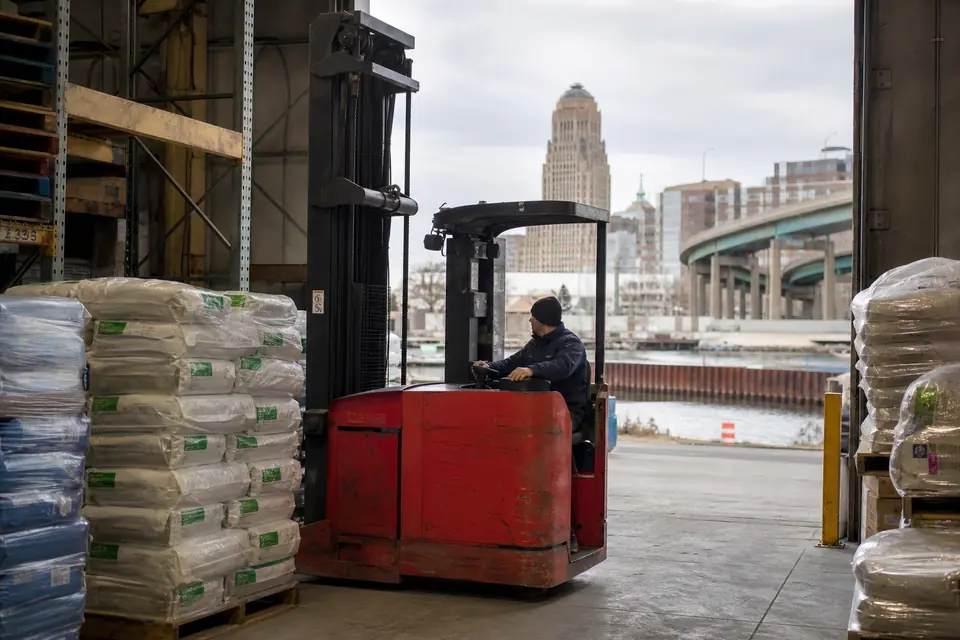
Buffalo combines Great Lakes and cross-border freight with food production, advanced manufacturing, building products and distribution. Food and indoor facilities may favor electric forklifts, while industrial and waterfront yards can require pneumatic-tire or internal-combustion forklifts. Cold, snow, dock conditions and indoor-outdoor transitions should shape tire, battery and maintenance planning.
Compare Used Forklift Condition With Long-Term Duty
For used forklift inventory, verify hours, tires, mast, forks, hydraulics, battery or engine and available service records. Compare condition, capacity at height, attachments, warranty and service access—not price alone. A machine that struggles with the duty cycle or winter environment can create avoidable downtime.
Use Forklift Rentals for Seasonal or Temporary Capacity
Forklift rentals can cover seasonal peaks, projects, planned repairs or a specialized lift. Provide the delivery ZIP code, dates, load, height, surface and expected hours. Confirm delivery, pickup, fuel or charging, maintenance, damage terms and cold-weather responsibilities.
Confirm Parts and Repair Support Before Committing
Ask how planned maintenance, parts and repairs will be handled for the proposed make and model. Winter use can increase the importance of batteries, fluids, tires and dock safety. Confirm the local service and warranty arrangement in writing.
Buffalo Material Handling Applications
- Cross-border freight and distribution
- Food production
- Advanced manufacturing
- Building products and outdoor storage